
Finding Brown County Residents
Start with whatever fact you already hold. An address fits the Brown County Property Listing first. A parcel, tax-listing record, legal description, and municipality may surface together there. A name works better in Wisconsin MyVote. Wisconsin Circuit Court Access or an old city directory may serve the same purpose. A document number belongs in the Register of Deeds index. Write the date and the person's role beside every result. An owner, mailing addressee, voter, court party, and historic occupant are not interchangeable.
Official rolls are useful evidence, but none is a complete household list. A deed shows a recorded property interest, not who lives there. A mailing address may belong to an owner elsewhere. Protected records may not appear at all. Brown County residents directory research is strongest when two independent sources agree on a name, place, and time.
- Normalize the address with USPS, including any unit.
- Find the current or historical parcel and record its municipality.
- Use the name in the state index suited to the question.
- Compare dates and roles across deeds, directories, and court records.
- Ask the custodian for a specific record when the portal trail ends.
Brown County Directory Custodians
Three custodians handle most of the current trail. The Register of Deeds holds deeds and vital records. Property Listing coordinates county tax-listing data, while each municipality keeps appraisal details and answers some address questions. The County Clerk administers elections and directs voters to MyVote and their local clerks. The full address method belongs in the Brown County street directory. These offices are the starting point.
Brown County Register of Deeds
305 E Walnut St, Room 260
Green Bay, WI 54301
920-448-7809
Brown County Property Listing
305 E Walnut St
Green Bay, WI 54301
Municipal contacts listed online
Brown County contains 24 municipalities. Local clerks and assessors resolve records that rest on town, village, or city authority. County Planning assigns new addresses only in specified towns and the Village of Denmark, so countywide corrections are not always possible. Some address problems belong to the municipality alone.
Brown County Parcel Search Fields
The Brown County Land Records portal separates current from historical properties. That choice matters after a parcel split, merge, condominium change, or new identifier. The county tax-map search adds owner-name and survey controls. The Land Records form lacks these. Try both systems and keep the exact parcel ID.
| Field | Use | Limit |
|---|---|---|
| Parcel number | Open one tax-listing record | Prior IDs may differ |
| Address and municipality | Match a situs address | Postal city can differ |
| Plat, section, township, range | Find rural or surveyed land | Needs legal-description terms |
| Current or historical | Follow parcel changes | Search both states |
The county warns that its listing omits some appraisal details. Photographs, square footage, bed and bath counts, and age sit with the municipal assessor instead. Save the situs and mailing addresses in separate fields. A tax-bill destination does not prove occupancy.
Brown County Deed Directory Trail
The Register of Deeds real-estate service offers a grantor-grantee index and images from February 1, 1962 forward. A grantor transfers an interest. A grantee receives it. Online routes include Laredo and Tapestry. An appointment-based public terminal is another channel. Older material calls for the terminal, the archives, or a focused request, never a quick conclusion that no deed exists.
The office's 2026 budget notes a tract index covering more than 101,300 parcels, with 28,035 real-estate documents recorded in 2023. A common name can return many unrelated entries. Use the parcel, municipality, document date, type, and legal description to keep the Brown County resident trail attached to the right land.
The official search page displays its coverage and access choices.
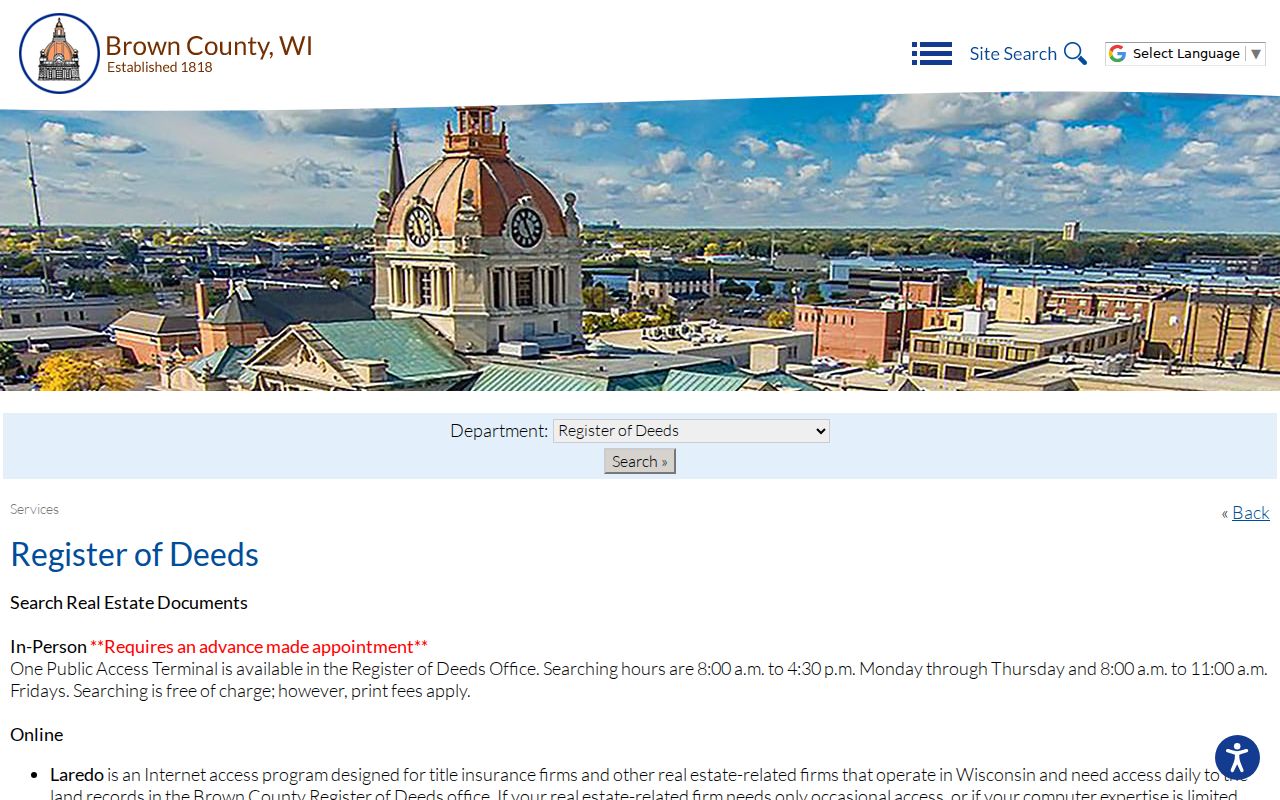
Online services and the courthouse terminal reach the same custodian.
Current Brown County Resident Rolls
Each current roll describes a different relationship. Property data is address and ownership evidence. MyVote is registration evidence, deeds name transaction parties, and courts name parties to public cases. Corporate and license tools document business roles, so a useful Brown County residents directory labels every result rather than merging names into a broad claim.
| Official source | Relationship shown | Custodian | Channel |
|---|---|---|---|
| Property Listing | Owner and mailing addressee | County and municipal assessors | Free portal |
| MyVote | Matched registered voter | Wisconsin elections system | Required search details |
| Deed index | Recorded document party | Register of Deeds | Online and terminal |
| WCCA | Public circuit-case party | Wisconsin courts | Free summaries |
| DFI Corporate Records | Business agent or officer | Wisconsin DFI | Free search |
Commercial listings go stale, merge names, or omit source dates. Official rolls name their custodian and purpose. For one individual, the Brown County resident lookup gives a source-by-source verification method.
Brown County Voter Directory Limits
Wisconsin MyVote searches by name and birth date, or by street, unit, city, and ZIP. It can show current registration, jurisdiction, voting history, and absentee or update options. Anything beyond ten years is excluded. That older participation belongs in a Badger Voters request. Public data elements can include status, address, jurisdiction, county, and contact information if it is on file.
A voter result confirms a stated link to Brown County for a matched person. It does not prove ownership. It does not list every occupant. Local clerks answer municipal election questions, and Wisconsin Safe at Home can protect an actual address. Record the query mode and access date, because registration and participation data change.
The MyVote page shows both official search routes.
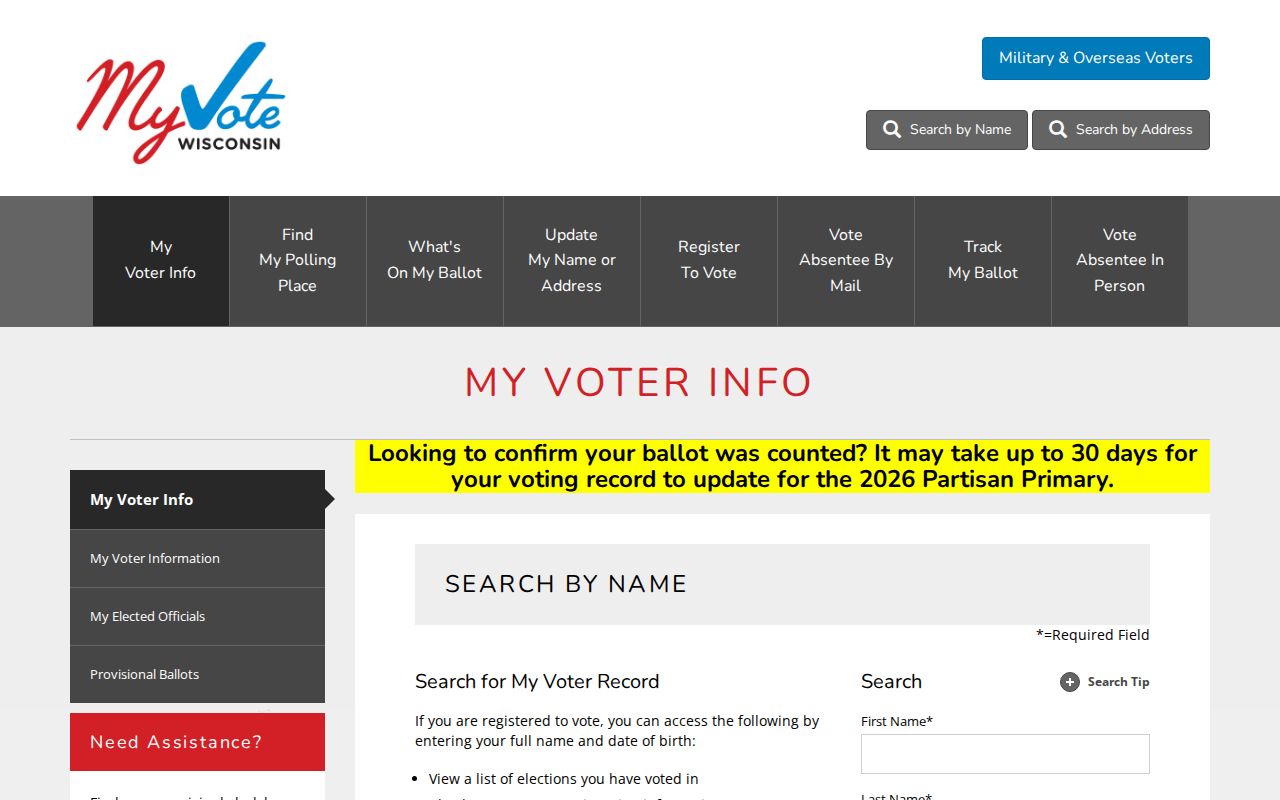
A full address or birth date narrows common names.
Brown County Court Record Search
Wisconsin Circuit Court Access covers circuit-court summaries for the whole state. Filters let you narrow by county, case type, status, date, and party. Brown County opens electronic access to cases back to 1990. Not every filing can be printed from home, though. Sealed, juvenile, expunged, and prejudgment paternity matters are excluded or limited. An empty result only means no public electronic match exists.
Need a specific document? The Clerk of Circuit Court copy service takes requests several ways. Options include in person, by mail, phone, fax, or email. Supply the case number and name the exact entry you want. Green Bay Municipal Court handles civil ordinance matters from January 1, 2004 forward. Its system updates each Thursday. A citation there is not a criminal conviction.
- Docket
- The dated list of filings and court events.
- Index
- A finding aid that may not contain the image.
- Certified copy
- An official copy authenticated by its custodian.
Brown County Vital Record Access
Birth, death, marriage, and divorce records flow through the Brown County Register of Deeds and Wisconsin Vital Records, in person, by mail, or through approved online routes. Statewide files generally start October 1, 1907. Expect an identification requirement and a fee. Certified copies go only to people with a direct and tangible interest, while genealogy and uncertified access follow looser rules.
Older family research benefits from the DHS genealogy indexes, the county's appointment-only genealogy room, library census tools, and UWGB Archives. An index points to an event. It is not the certificate. Record the exact name, date range, county, index title, and page or record number before you order anything.
Brown County Records Law Requests
Wisconsin Public Records Law, Wis. Stat. §§ 19.31-19.39, tilts toward releasing government records while still permitting redaction and lawful limits. The Wisconsin Department of Justice guide walks through access, timing, and how to challenge a denial. A request may be oral or written. Precision still matters. Name the office, the record type, the subject, the date range, and the delivery format you prefer.
Green Bay takes requests online, by mail, email, phone, and drop-off. Its form lists a 25-cent-per-page copy charge. Actual costs or prepayment may apply. County offices keep their own custodians and schedules. Ask for a record that exists rather than an answer to a broad question. If denied in writing, keep the denial and the rule cited.
Brown County ZIP Geography
A postal city label does not settle where a parcel legally sits. Brown County contains 24 municipalities. An address can carry a familiar Green Bay postal name while the land itself sits in a village or town with its own clerk, assessor, and address authority. Begin with the USPS ZIP Code Lookup. Then compare that result against county parcel layers and municipal boundary maps.
Wisconsin's ZIP-class table splits standard, post-office-only, and unique ZIPs apart. A post-office box or an acceptable city name proves nothing about parcel location. Census ZCTAs are statistical areas, not delivery boundaries. Keep the USPS result, legal municipality, county, parcel situs, and mailing address as five separate facts.
Brown County Archive Search
The Brown County Library local-history collection holds over 10,000 print volumes and 4,400 microfilm reels. Its city directories reach back to the 1870s. Newspapers, federal and state census sources, card indexes, and HeritageQuest sit alongside them. Staff research time is limited. A focused surname, address, edition, and year saves everyone effort.
UW-Green Bay Archives adds citizenship, court, land, tax, probate, and regional genealogy collections. Its online index is partial and shows no images. Each request covers up to 20 pages for $10. Extra pages run 50 cents, with a six-to-eight-week estimate. When a surname resists exact spelling, try Soundex and surname-only forms.
The library collection page displays the full range of Brown County residents directory sources.
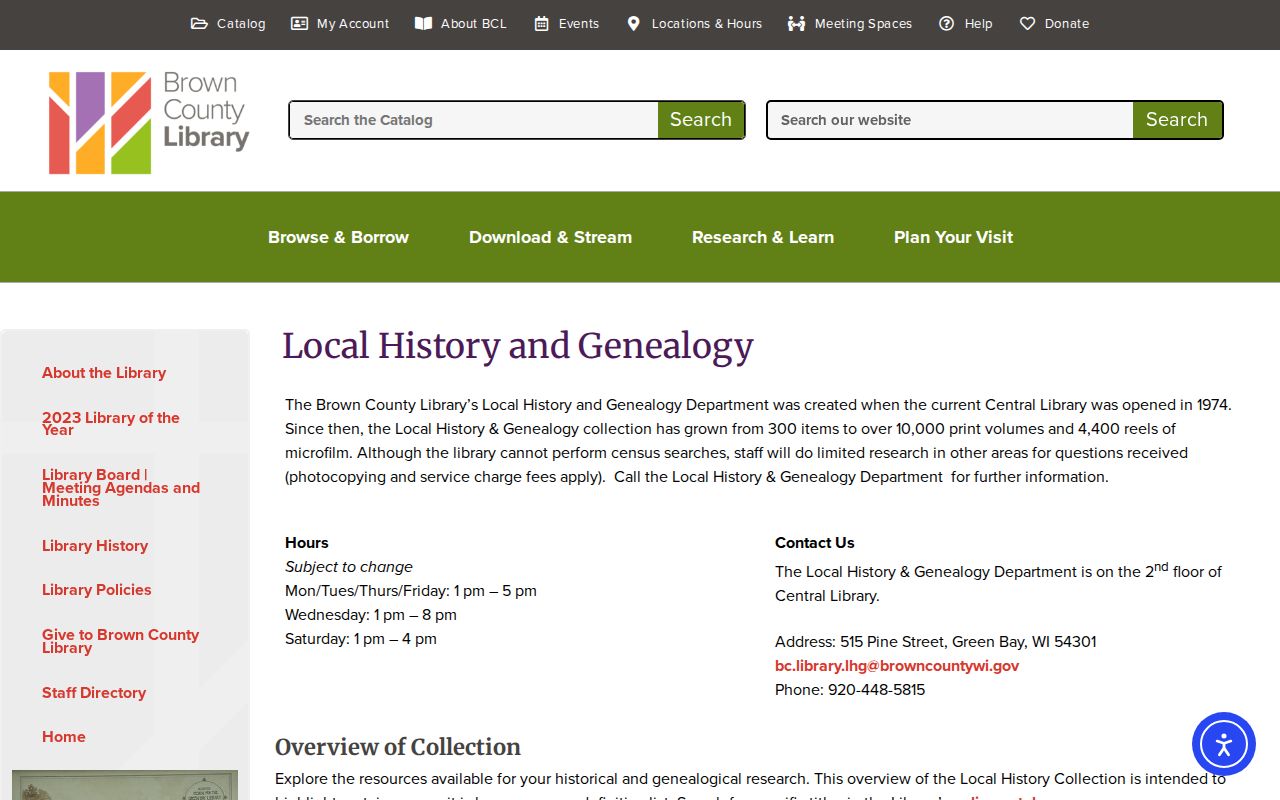
Its inventory helps you pick a directory, newspaper index, census tool, or microfilm run before asking staff.
Brown County GIS Record Changes
BrownDog and the Brown County GIS document library supply map context no text record can match. Parcel polygons, municipal boundaries, rights-of-way, historic parcel lines, addresses, aerial images, and document links help test records. They help show whether two records describe the same land. A GIS line is a spatial reference only. It is not a legal survey. Match it against the parcel ID and the recorded legal description before joining names from separate sources.
The county's 2025-2027 Land Information Plan describes automated nightly linking and publishing. It also notes online data syncing roughly four times each week. Monthly parcel-change PDFs cover 2025 and 2026. These include January through July 2026 plus a key to change codes. Those dated lists can explain why a current parcel, map shape, or address differs from an older tax record. They can also explain a differing legal description.
The Brown County GIS resources page records the access point during the shift toward BrownDog2.0.
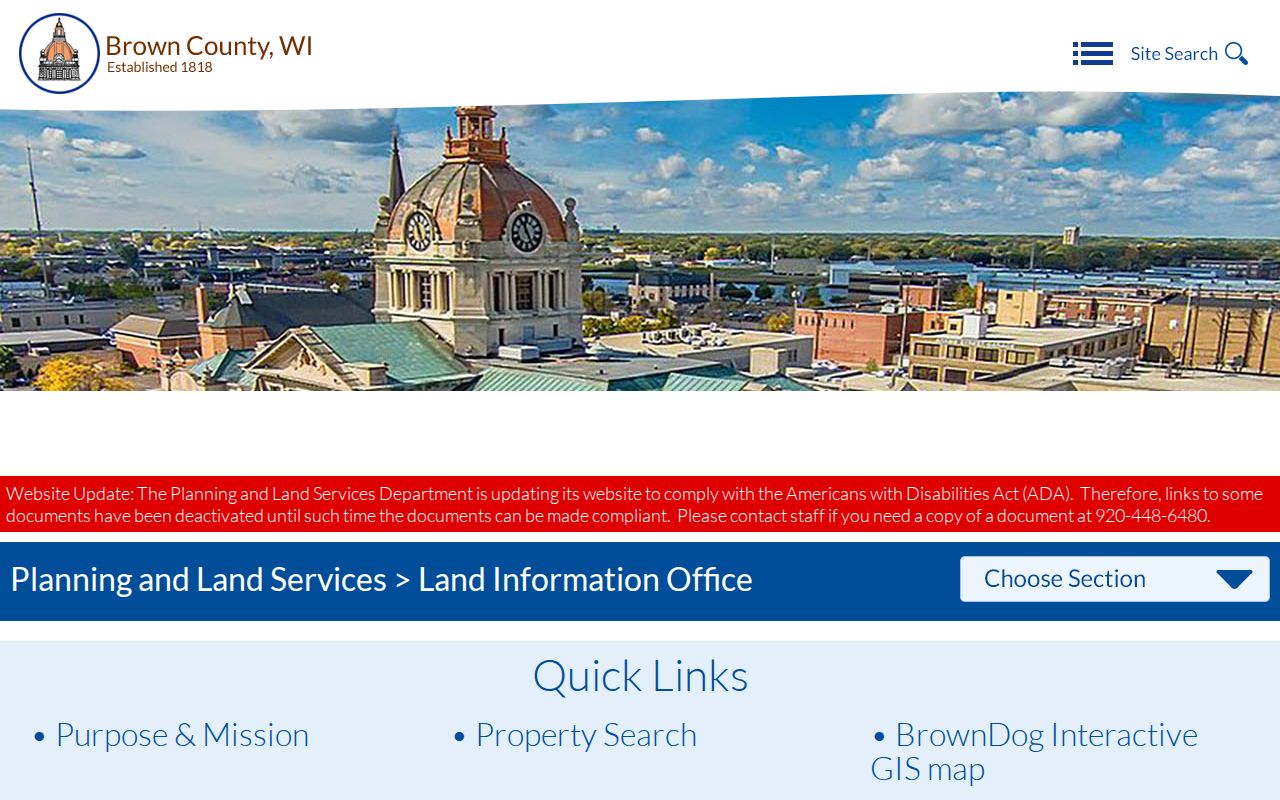
Save the viewer name, layer, parcel ID, screenshot date, and a direct link to the record. That evidence stays reproducible even if an older map application is retired.
Brown County Record Stopping Rules
Stop when the evidence stops. That is the whole rule. A name in a deed proves a grantor or grantee role. Label it that way and nothing more. A name in a voter result is a separate match. Log it with its own date and the query details the record required. Court files, jail rosters, state custody lists, registries, business filings, and credential systems each track a distinct legal relationship. None of them can fill a gap left by another.
An evidence log earns its keep. Record the exact displayed name, the normalized spelling, the event or publication date, and the record type. Add its status, the source URL, and the custodian, plus any access limit. Keep situs and mailing addresses in separate fields. Preserve a parcel's current, alternate, and prior identifiers too. Any Brown County residents directory conclusion should state plainly what each source proves. It should also say what each source leaves open.
A failed portal query calls for a documented fallback, never a guess. Work the options. Try spelling variants or Soundex through UWGB. Try historical parcel controls in Land Records, the Register of Deeds terminal, a municipal clerk or assessor, library microfilm, or a precisely written public-record request. Stop once the remaining source is restricted or sealed. Stop if it falls outside the date range or cannot be tied to the same person or place.
Historical Brown County Directories
Green Bay city directories survive from the 1870s. Documented editions include 1872-73 plus sample years such as 1893, 1929, 1933, 1942, 1953, 1963, 1974, and 1983. A dated entry may list a householder's name, spouse, job, employer, and street address. Later criss-cross sections flip the order and organize entries by street instead. The Brown County city directory covers the collection in depth.
Several custodians hold the pieces. The Brown County Library keeps directories, newspapers, census sources, and card indexes. UWGB Archives adds assessment cards, deeds, maps, tax records, photos, and oral histories. The Brown County Historical Society offers appointment access at Hazelwood Historic House. Its predecessor formed in 1899 with 48 civic leaders and adopted the countywide name in 1928, which is why local records now sit with more than one keeper.
- Roll
- An official or institutional list made for a stated purpose.
- Parcel
- A mapped unit of land with its own identifier.
- Criss-cross directory
- A directory arranged by street and house number.
- Index
- A tool pointing to a record that may be stored elsewhere.